


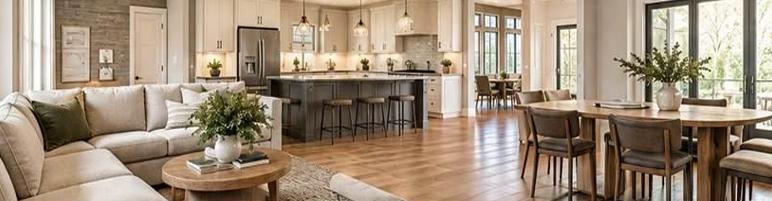
Hardwood in the living room. Tile in the kitchen. Wall-to-wall carpet in the bedrooms. A completely different wood tone in the hallway.
Individually, each choice might look beautiful. Put them all under one roof, however, and your home can start to feel less like a thoughtfully designed space and more like a circus tent—with every room competing for attention.
When planning a renovation, it’s easy to treat each room as its own design project. The kitchen has different practical needs than the bedroom, and the living room certainly doesn’t need to look like the bathroom. But before choosing a completely different floor for every space, consider how those decisions will work together throughout your home.
Flooring is one of the largest and most permanent elements of your interior. Unlike a lamp, sofa, or area rug, it is not something you can casually swap out when you wake up one morning craving something new.
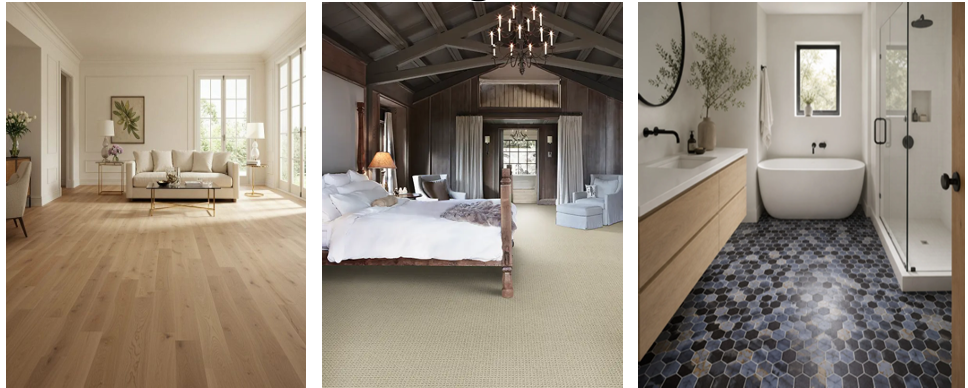
Different materials can serve different purposes while still feeling connected.
Different flooring materials serve different purposes, and there are plenty of good reasons to use more than one throughout your home:
Hardwood adds natural character, warmth, and timeless appeal.
Carpet brings softness, comfort, and sound absorption, making it a popular choice for bedrooms and cozy living spaces.
Luxury vinyl plank (LVP) offers versatility and durability for busy households.
Tile is especially practical in bathrooms, mudrooms, and other areas where moisture resistance matters.
The problem is not mixing materials. The problem is mixing so many different floors that the house starts competing with itself.
Imagine walking from warm oak flooring into cool gray tile, then into dark walnut, followed by patterned tile in the entryway and beige carpet upstairs. Every floor might be attractive individually, but together they introduce a long list of colors, undertones, textures, and patterns that the rest of your décor now has to accommodate.
Suddenly, your furniture, rugs, curtains, wall colors, and accessories are all trying to negotiate with the floor. Before you know it, every room has entered the talent portion of the competition.
Why Cohesive Flooring Works So Well in Modern Homes
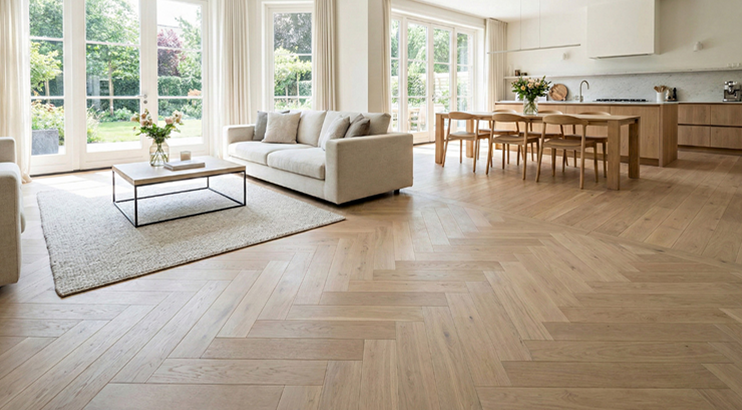
Modern homes often emphasize open floor plans and connected living spaces. When the flooring changes every few feet, those spaces can feel visually chopped up.
Using one flooring material—or complementary materials—through connected areas creates a smoother transition from room to room. A continuous hardwood or hard-surface floor allows the eye to travel through the space rather than stopping at every doorway.
It can also help rooms feel larger and more connected. Instead of visually announcing, “Welcome to the kitchen. Now welcome to the dining room. And over here is an entirely different floor,” your home feels like one thoughtfully designed environment.
Even better, a consistent flooring foundation gives you greater freedom with the rest of your design. You can change the personality of each room through furniture, artwork, paint, lighting, curtains, and area rugs without having to coordinate every decision with an entirely different floor.
One Floor Doesn’t Mean One Personality
Choosing a consistent floor throughout your main living spaces does not mean every room needs to look identical. Quite the opposite.
Think of flooring as the backdrop rather than the star of the show. A beautiful wood floor can support a traditional living room with an antique-inspired rug just as easily as it can complement a modern dining space with sculptural furniture.
A bedroom can feel soft and layered through textiles, while an office can take on a darker, more sophisticated character through paint and furniture. The floor stays consistent while the décor does the storytelling.
Don’t Underestimate the Power of Rugs
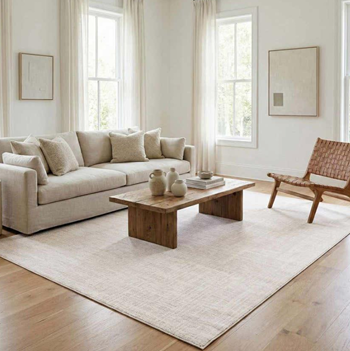
Area rugs are one of the easiest ways to introduce personality without adding another permanent flooring material. Use them to:
Define a seating area in an open-concept living room.
Introduce color, pattern, and texture.
Make a bedroom feel softer and more inviting.
Visually separate dining and living areas without dividing the space.
Rugs let you experiment with your style while keeping the overall look of your home connected.
When Does Different Flooring Make Sense?
Of course, not every room needs to match. Bathrooms, mudrooms, laundry rooms, and other specialized spaces may benefit from flooring selected specifically for how the room is used.
Carpet can make sense in bedrooms where warmth and comfort are priorities. Tile may be ideal for a bathroom. And if you live in a historic home with beautiful original hardwood, preserving that character may be the best design decision of all.
The goal is not to eliminate every flooring transition. The goal is to make those transitions feel intentional.
If you are combining materials, pay attention to their colors, undertones, textures, patterns, and how they meet one another. Warm hardwood paired with complementary tile can look sophisticated and carefully planned. Several unrelated wood tones throughout a relatively small home, however, can begin to look disconnected.
Think of it this way: your house can have different outfits for different occasions, but they should still look like they belong in the same closet.
Five Tips for Choosing Flooring That Flows
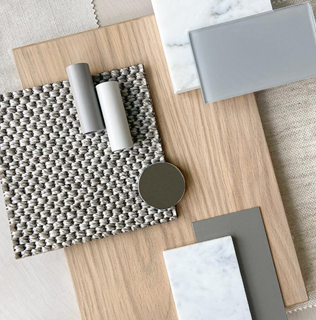
Start with the biggest connected spaces. Consider the living room, dining room, kitchen, and hallways as a group. Consistent flooring in these areas can create a natural sense of continuity.
Pay attention to undertones. Wood-look floors, tile, and other materials can have warm, cool, or neutral undertones. Even when colors seem similar, clashing undertones can make a combination feel off.
Limit competing patterns. If your flooring already features a strong grain, dramatic color variation, or distinctive pattern, balance it with simpler materials elsewhere.
Choose materials based on how rooms are used. Style matters, but so do moisture, foot traffic, comfort, and maintenance. The best flooring plan balances appearance with everyday practicality.
Make transitions part of the design. When you need to change materials, consider how the floors meet at doorways and between rooms. Coordinated colors and well-planned transitions can help different surfaces feel connected.
So, Does Your Flooring Need to Match?
Not necessarily. But it should be coordinated.
For many homes, keeping consistent flooring throughout connected living spaces creates a cleaner, more timeless, and more flexible foundation. It allows furniture, artwork, rugs, and paint colors to provide the personality instead of asking the flooring to make a statement in every room.
Different flooring can absolutely work—and sometimes it is the most practical choice. The key is knowing where to introduce a change and where to let things flow.
Good design is not about making every room identical. It’s about creating a home where each space feels individual without looking like it wandered in from a completely different house.
You want your home to have personality—not a full-time job as a circus tent!


